GIA DINH HOUSE
URBAN HOUSE
LOCATION: 47 Nguyen Duy st., Binh Thanh dist., HCMC, Viet Nam
DESIGN TEAM: Giang Doan + Tran Xuan + Lam Bui + Phuc Khoi + Manh Tri + Hoang Duong + Quoc Khai
YEAR: Completed in 2024
PHOTOGRAPH: Quang Dam
LOCATION
DESIGN TEAM
YEAR
PHOTOGRAPH
47 Nguyen Duy, Binh Thanh Dist., HCMC, Vietnam
Giang Doan + Tran Xuan + Lam Bui + Phuc Khoi + Manh Tri + Hoang Duong + Quoc Khai
Completed in 2024
Quang Dam


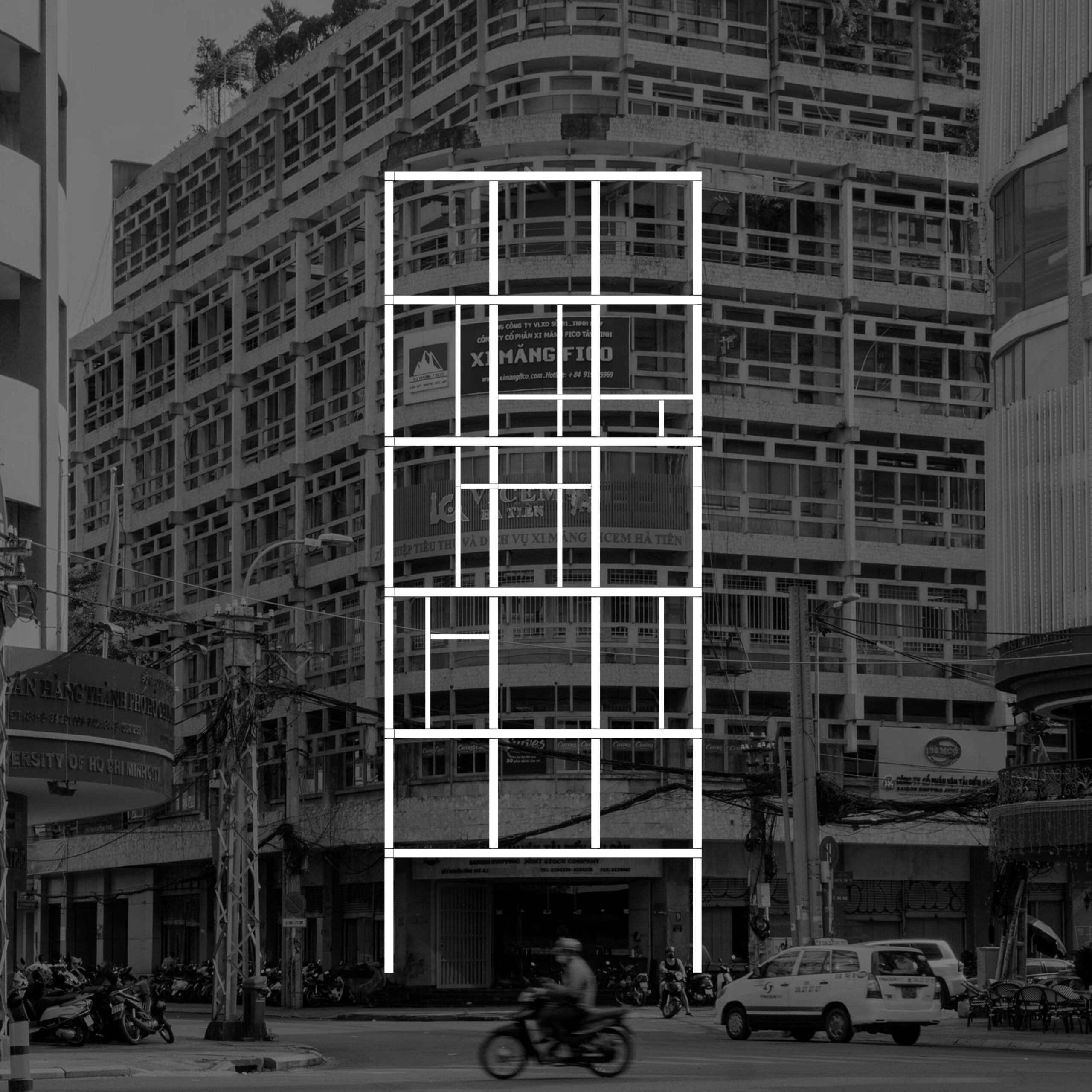


Gia Dinh House project is located in an old neighborhood that used to be the center of the old Gia Dinh province. The site is unique, a great chance for G+ to use the space in a creative and flexible way, not following typical rules.
The house is a small co-living model in the city center. The owner lives there but also rents out apartments and uses some space for an office or café. At the same time, both the owner and tenants have privacy and good living quality. The ground floor and mezzanine are almost fully open, creating a smooth connection between the alley and inside the house. The gate and doors use steel mesh frames to make the space more transparent, blurring the line between inside and outside. This way, the house feels like it belongs to the alley friendly, open, and welcoming.
The mezzanine is also designed as a flexible common area where residents can meet, relax, and connect. It acts like a shared living room for the whole building.
The house faces east and is angled along the plot of land. The design team used this angle well to create different useful spaces, like small △ balconies, bathrooms, and plant areas. At the west side, there is a vertical garden that runs from bottom to top. It helps block sunlight and cools the space. Together with the 〇 stairs, it creates airflow from back to front through small vents and window shutters, helping ventilation.
The □ elevator is placed in the center, like a backbone of the building. All movement and space organization spread out from here. Instead of hiding it, the elevator is highlighted as a sculptural element in the space.
To improve air flow and open views, the floors have semi-public open halls where residents can do laundry, dry clothes, sit, or talk. This adds more living space.
Gia Dinh House shows how we approach design challenges in the city: solving odd-shaped land, small spaces, and rethinking living in a townhouse. The site’s context, shape, and different needs inspired our ideas to make the house functional, flexible, and beautiful. This project also continues our research on ‘living and sharing in townhouses’ or ‘co-living’ that G+ architects have been working on in recent years.